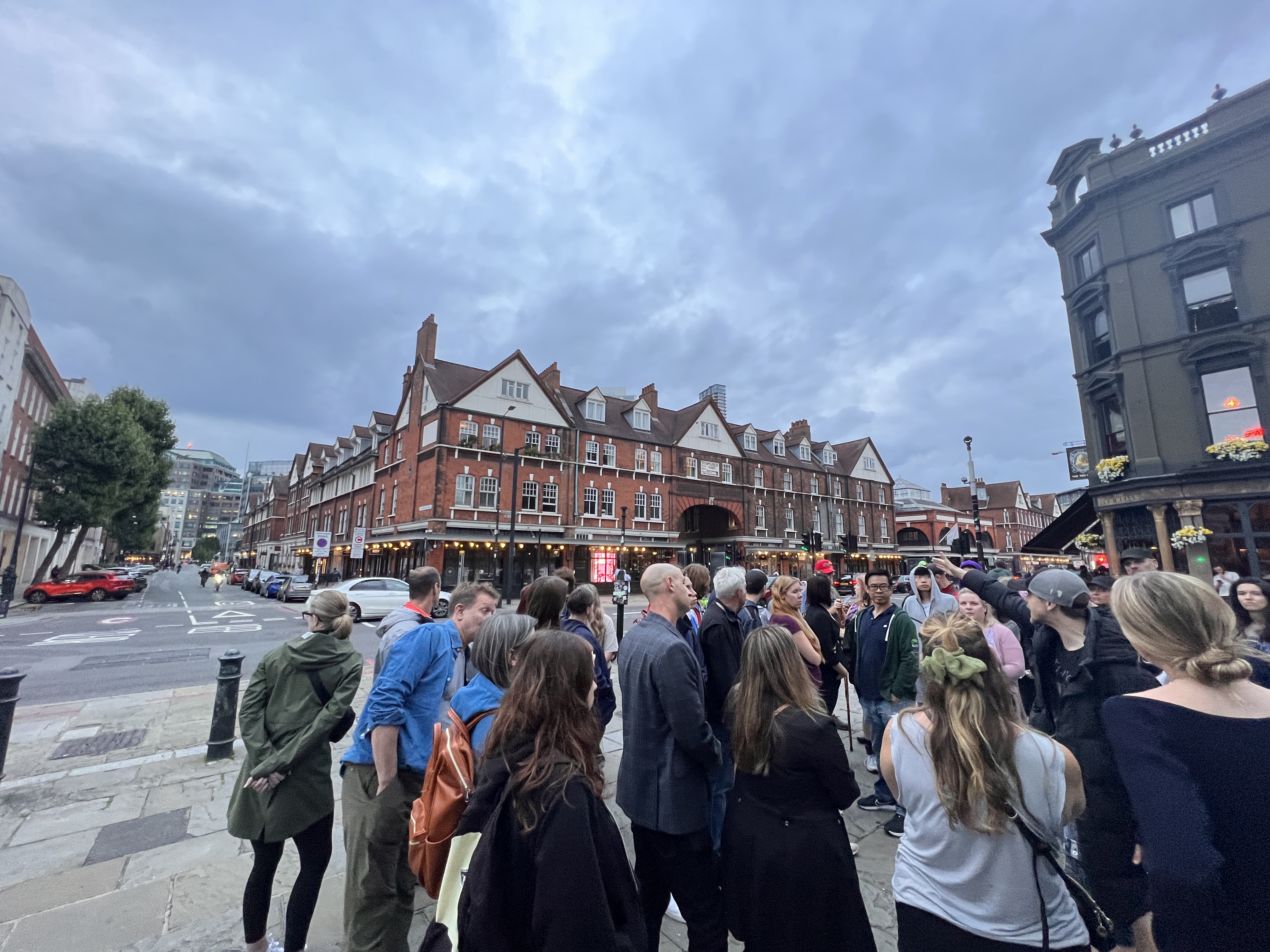
Have you ever found yourself in a quiet moment, walking down a busy street or sitting in a crowded restaurant, when suddenly you're struck by a realization? It's that moment when you pause and truly grasp the fact that every person you see, every stranger passing by, is living a life just as intricate and meaningful as your own. They have their dreams, struggles, triumphs, and routines that unfold independently of your awareness. This realization, often referred to as "sonder," is the profound understanding that the world is filled with individuals, each with their own story, aspirations, and complexities. This experience happened to me when I became conscious of the slow decline of my uncle. It's watching as time takes its toll, as illness or age chips away at the spirit of those close to us. The ache of feeling helpless in the face of the inevitable. Reading "The Perks of Being a Wallflower" taught me that embracing who I am and questioning the "rules" imposed on me grows stronger when facing tough times.
My family has a history of Huntington's disease, a “rare inherited condition that leads to the gradual degeneration of nerve cells in the brain, significantly affecting an individual's motor functions and cognitive abilities”(MayoClinic 1). An illness that causes your brain to deteriorate, and as it spreads, you lose complete control over your body and functions. Three people in my family have died from it so far: my great-grandmother, grandfather, and recently my uncle. At first, I had absolutely no idea what was going on. I did not ask questions; I just went on with my life of playing and having fun. Then some things started to change. My uncle had to move in with my grandmother. But that did not change anything. He still took me to get pizzas and cookies at the mall every week, and we sat in the trunk of his car and listened to music. Over the course of months, we could no longer do that because he could not drive anymore because he did not have complete control over his hand. So Nana had to drive him everywhere he wanted to go. Gym on Mondays and Wednesdays and McDonald’s on Tuesdays and Fridays.
After a while, he stopped going to the gym because he could not walk probably, so he just went to McDonald's like he usually does. We would drop him off, get his food, and wait for him to be done. Until some guys followed him to the bathroom and robbed him and even that simple outing was lost. Months turned to years and he could not even walk downstairs to get a bottle of water. He has no control of his body, and can't feed himself or do something as simple as flipping the channel on the remote. I think the worst thing for me is him not remembering who I am or those weekly trips to the mall for pizza and cookies. As I got older and he basically became like Benjamin Button towards the end or in Benjamin's case the beginning of his life, I developed the fear that his suffering would be my suffering. That scared me so much that I did not point in doing anything or trying even because what would be the point?
A turning point in my perspective came when I read the book "The Perks of Being a Wallflower in 11th grade. This book helped me when I was going through a hard time, and even though the book itself had nothing to do with my problem, it seemed like it had everything to do with it. This novel served as a profound reminder that conformity is not a predetermined fate. The protagonist Charlie is on a path of self-discovery, trying to understand his own identity while facing the challenges of nonconformity: “I'm going to do what I want to do. I'm going to be who I really am. And I'm going to figure out what that is, and the complexities of life itself” (Chbosky 332). This leads him to question established norms and conventions, and the search for individuality in a world that often demands conformity resonated deeply with me.
In my journey of navigating the impact of a disease that has affected three of my family members, it became increasingly evident that viewing it as a death sentence was a mindset I refused to conform to. The initial shock and fear threatened to hold me back, but instead, it became a catalyst for change. Recognizing the preciousness of life, I decided to actively engage in it, breaking free from the grip of what could be despair. I learned that nothing is set in stone and that “things get worse before they get better” (Chbosky 212), and each individual can shape their life. I learned that “ even if we don't have the power to choose where we come from, we can still choose where we go from there. We can still do things. And we can try to feel okay about them” (Chbosky 338)It became a source of inspiration, encouraging me to embrace my problems and forge my way, unburdened by the expectations and limitations imposed by those who suffered before me.
This transformation involved a renewed commitment to traveling and seeing as much of the world as I could, something my uncle never had the chance to do. I embarked on a mission to live the best life possible, determined not to succumb to the gloom that the disease cast over my family. The decision to defy the conventional narrative surrounding the illness and, instead, strive for a fulfilling life.
As I continue to navigate the challenges associated with my family's health struggles, "The Perks of Being a Wallflower" remains a constant reminder, reinforcing the importance of nonconformity and the pursuit of an authentic life. It has become a pivotal part of my life reminding me that in the face of adversity, I have the power to determine my narrative and craft a story that defies the constraints of conventional expectations.